
There is a version of leadership that manages reality, and there is a version that redefines it.
When we talk about Reality Distortion, we do not mean fantasy. We mean the disciplined refusal to accept inherited constraints as final. We see this in business all the time: targets get labelled unrealistic, markets get labelled saturated, customers get labelled immovable. Very often, the real limit is not capability. It is an interpretation.
What follows are real examples of leaders and businesses that challenged a deeply held assumption, changed the brief, and achieved results that seemed unlikely until they were operationalised.
Steve Jobs / Apple — premium did not have to mean fragile

Steve Jobs rejected a hard-plastic screen for the first iPhone after a prototype scratched in his pocket and insisted the device ship with glass. The result was Gorilla Glass, which Corning says has since been designed into more than eight billion devices worldwide.
The distortion: A category-defining product did not have to inherit the normal trade-off between feel and durability.
Concrete outcome: The first iPhone shipped with glass, and Corning turned the challenge into a massive new cover-glass platform.
Leader takeaway: If the experience matters strategically, treat the constraint as the start of the brief, not the end of the conversation.
Reed Hastings / Netflix — the current winner did not get to dictate the future

Reed Hastings made a move most incumbents delay for too long: he started building the next model before the current one had finished paying out. Netflix’s 2007 annual report highlighted instant streaming even as the company ended that year with 7.5 million subscribers and $1.2 billion in revenue, and by the end of 2024 Netflix reported roughly 302 million paid memberships and $39.0 billion in streaming revenue. The distortion was not merely believing in streaming. It was refusing to let DVD success dictate the future shape of the business.
The distortion:A profitable legacy model did not deserve veto power over the next growth engine.
Concrete outcome: Streaming moved from an added feature to the company’s global core business.
Leader takeaway: Cannibalize yourself early if the future is visible enough. Waiting for certainty is often just slow decline with better optics.
Different industries. Same move. In each case, someone challenged the sentence everyone else was quietly treating as fact.
The next examples matter just as much to me because they are less about charisma and more about systems.
Oprah Winfrey

Oprah Winfrey was fired from her first TV job in Baltimore, yet became the undisputed queen of talk shows and built a media empire worth nearly $3 billion.
Steven Spielberg

Steven Spielberg was rejected repeatedly by the University of Southern California’s School of Cinematic Arts, then created Jaws, the first summer blockbuster, and won three Oscars.
Michael Jordan

Michael Jordan was cut from his school basketball team. “I have failed over and over and over again in my life,” he said, “and that is why I succeed.”
Success begins in the mind. Your beliefs shape your perceptions, drive your actions, and, ultimately, decide your destiny. Choose them wisely.
Thomas Edison
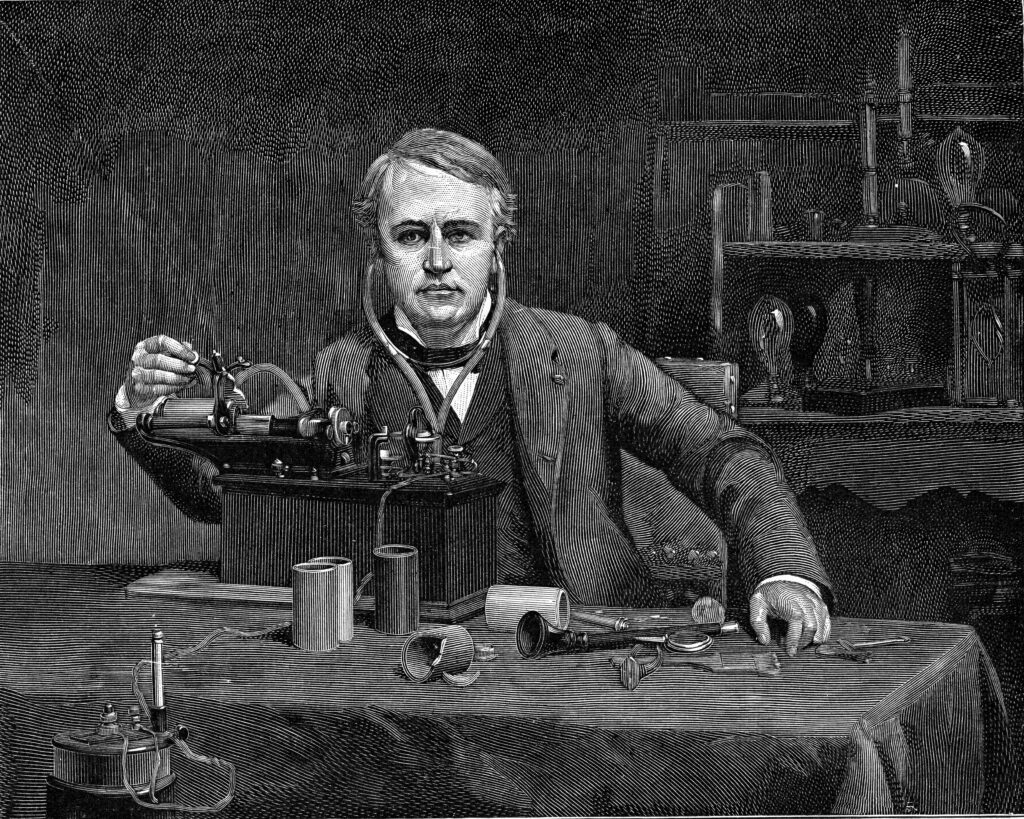
Thomas Edison was told by his teachers that he was “too stupid to learn anything”. He eventually held more than 1,000 patents, including the phonograph, the practical electric lamp and the movie camera.
Walt Disney

Walt Disney was fired by a newspaper editor for having “no imagination and no good ideas”. Several ventures failed before Snow White premièred; today, his creations define childhood for millions.
James Dyson / Dyson — bags were not a feature, they were the flaw

James Dyson spotted an industry assumption hiding in plain sight: vacuum bags were treated as normal, even though they degraded performance and generated lucrative aftermarket revenue. Dyson’s own history says he went through 5,127 prototypes and repeated rejections before launching the first mass-produced cyclonic vacuum in 1993; according to Dyson, the DC01 became the best-selling vacuum cleaner ever produced by 1995. What made the story powerful was not persistence in the abstract, but persistence attached to a clearly superior engineering principle.
The distortion: The accepted industry standard was not the solution. It was the problem.
Concrete outcome:Dyson built a new product category around bagless technology and, by its own account, turned DC01 into the market-defining machine of its era.
Leader takeaway: When incumbents profit from the compromise, expect resistance. That does not make the compromise right.
Toyota — stopping the line did not have to mean losing efficiency

Toyota overturned one of manufacturing’s deepest instincts: keep the line moving at all costs. In the Toyota Production System, jidoka means stopping immediately when a problem appears so defects do not move downstream, while just-in-time keeps inventory low; Toyota describes TPS as an internationally recognised system that maintains low inventory while preserving operating efficiency. Counterintuitive? Absolutely. But quality accelerated because problems were surfaced early, not hidden longer.
The distortion: Interrupting flow to solve the problem could be more efficient than protecting flow and passing the defect onward.
Concrete outcome: Toyota institutionalised visible problem solving, low inventory and quality built into the process itself.
Leader takeaway: If your system punishes the surfacing of problems, it is training people to hide the very thing that most needs fixing.
And in B2B, the most powerful distortions are often commercial rather than technical.
Reality distortion in business is not about charisma, slogans, or pretending constraints do not exist. It is about identifying the assumption that is quietly capping performance, then building the process, product or commercial model that no longer obeys it. The leaders above were not reckless. They were disciplined enough to challenge the belief that everyone else had already mistaken for reality.
That is where exceptional results begin.
How do you currently perceive and influence reality?
This questionnaire helps you understand how you currently perceive and influence your reality. Be honest with yourself; your responses will serve as a baseline for growth.
For each statement, select the option that best reflects your usual way of thinking.
At the end, you’ll get a score indicating your current mindset about reality and influence.
